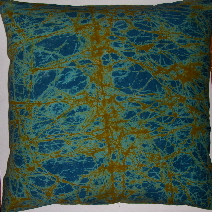
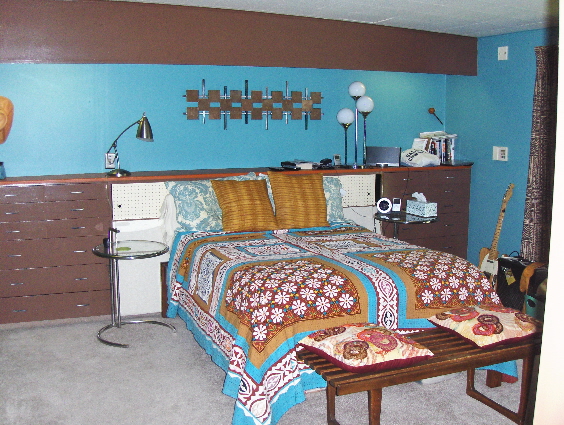
Piccsy: The go to site for image sharing

Check out Piccsy.  I have never heard of it, am not sure how I stumbled upon it, but it is amazing. I just requested an invite. Please don’t let me down, Piccsy.

http://piccsy.com/

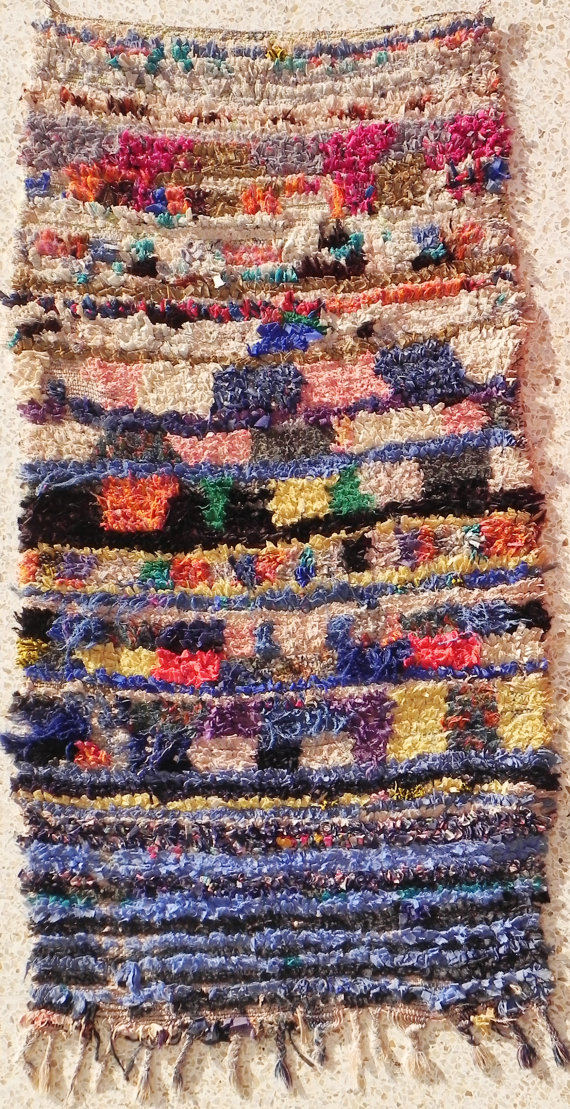
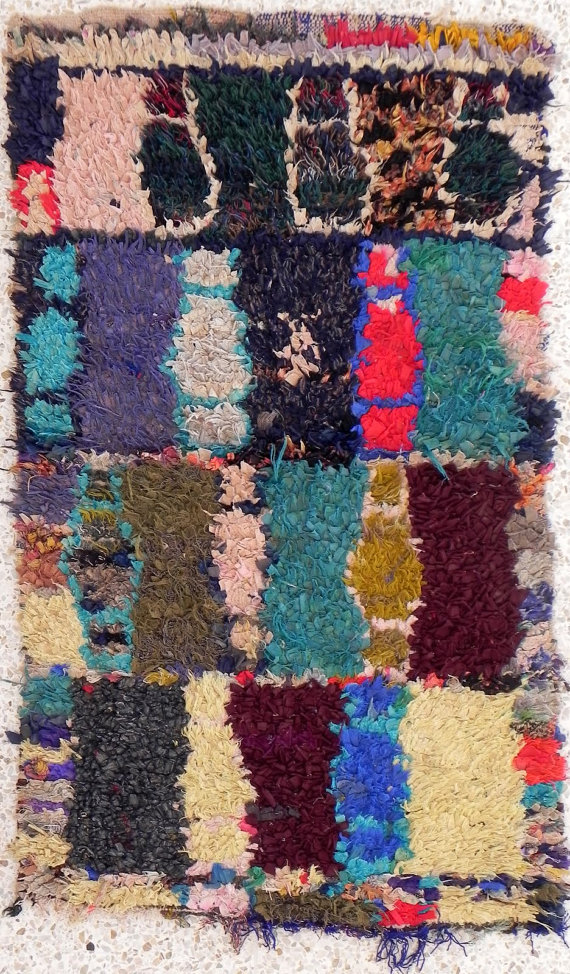
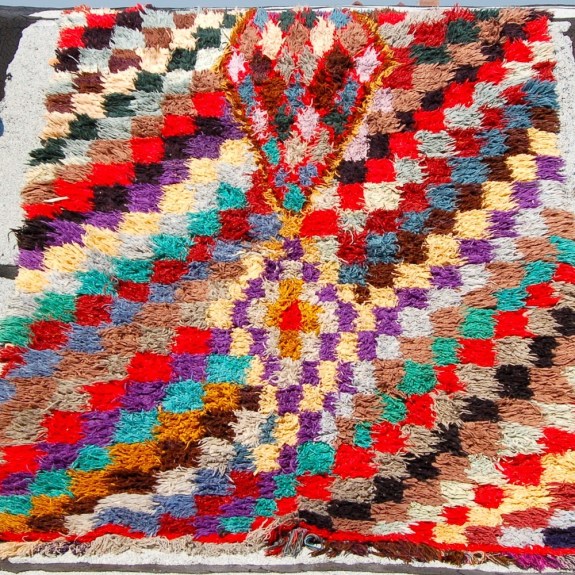
Vintage Morrocan rag rugs are chaotically beautiful.

boucherouite on etsy
boucherouite from Beldi

These are one of my favorite reveals form 2011. I first saw one of these rugs on a page in Elle Decor of a hallway in  a Manhattan apartment. I was immediately smitten with its asymmetry, bright colors and freeform feel. I learned that these are known as boucherouites and were woven by the Atlas women of Middle Morocco. In the 1960’s, a shortage of wool forced the se weavers to resort to using repurposed scraps to make these rugs. They had no commercial or export value for years. Recently, they have started to grow in popularity with people in Western Europe and the U.S.  Due to a limited supply, weavers all over Morocco have started making new ones.

Get the vintage collectibles while they are available and affordable!!

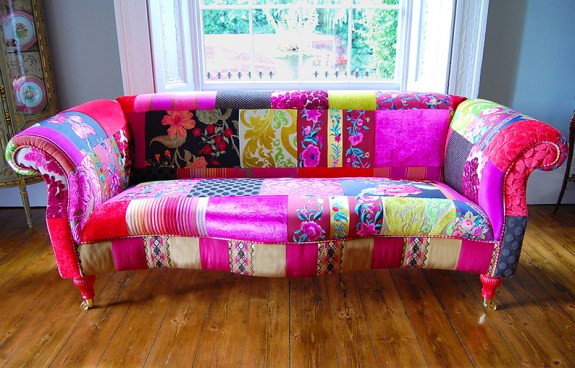
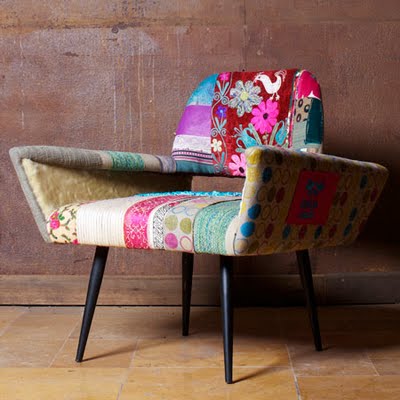
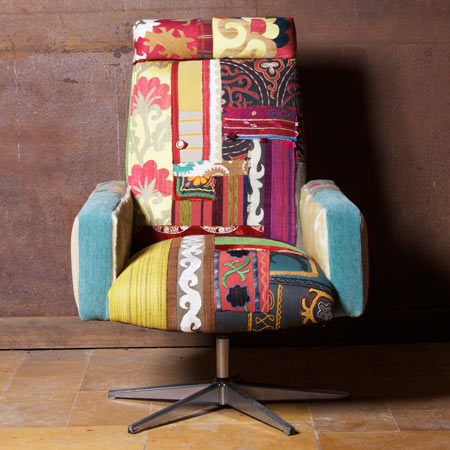
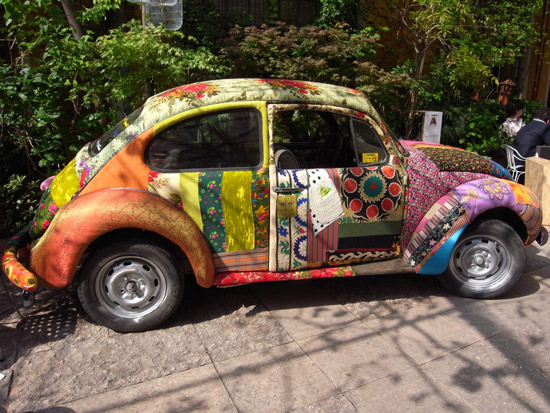
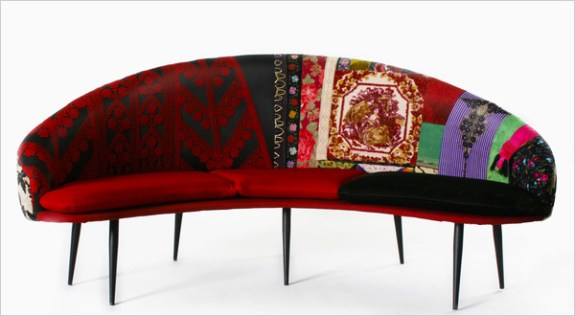
Patchwork frenzy in home furnishings

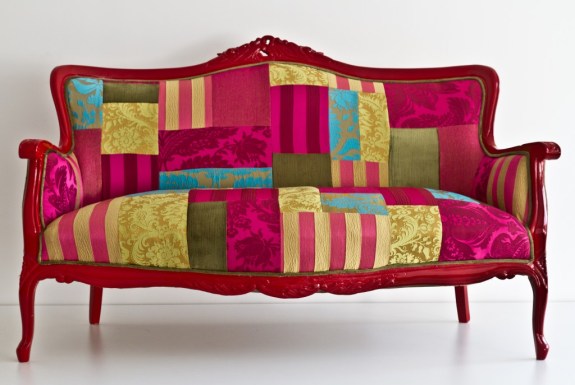
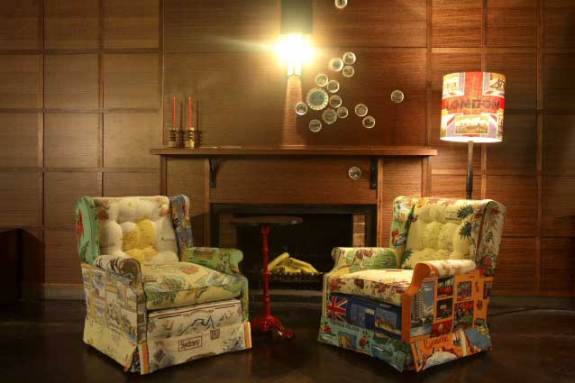
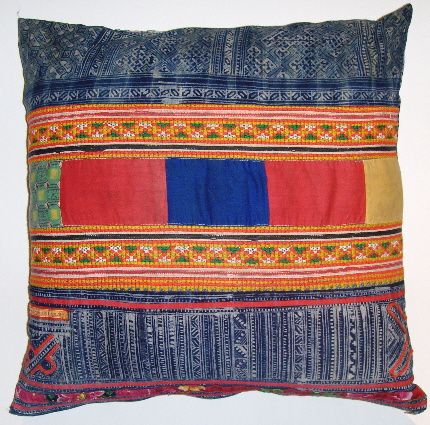
I previously posted about two companies that use patchworked fabrics to upholstery furniture. One is Squint out of the U.K. and the other is Bojka Design out of Lebanon. I have since found two more and have added images and links below to their sites. I must admit that I have patchwork crush and have added patchworked pillows and comforters to Fabricadabra’s offerings.  I have added patchworked vintage sari pillow covers and Hmong Tribe patchwork vintage fabric pillows and throws.  I think it is a clever way to use scraps and ressurect old fabrics, although they are labor intensive to sew.It is clear that patchwork fabrics in home furnishings continue to trend upward.  What do you think about these?

Couch U.K. patchwork sofa

Eco upholstered furniture, Home Furnishings, textiles, Upholstered furniture

, , , , , , , , , , , , , , , , ,

October 10, 2011

Comments Off on Patchwork frenzy in home furnishings

Out of Africa and into our hearts- African inspired textiles

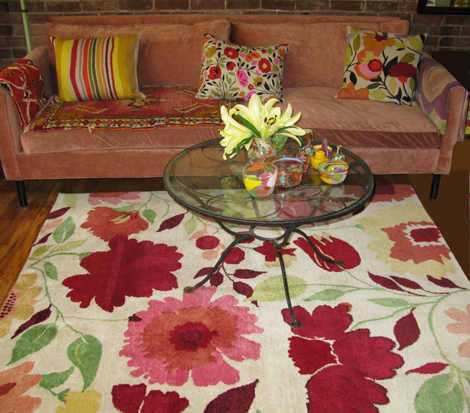
Kim Parker’s floral artwork bursts with positive energy.

Kim Parker Morning_Roses_rug

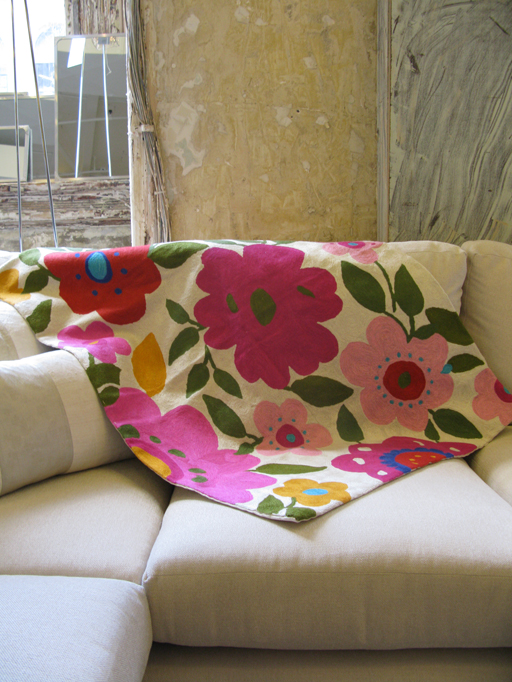
Okay, this isn’t my first Summer out, but I just discovered this woman’s website and am enamored with her blooming floral artwork.  I am a bit embarrassed that the entire world appears to have found her and I am just now learning about her beautiful creations. Her florals are clean, contemporary, bold and cheerful. She is an artist, textile designer and author. She has her own private label of rugs, textiles and soft home furnishings. She has lines of tableware, giftware and fine art wallhangings through major  outlets such and Bed, bath and Beyond, Target and Amazon. Here is her website  http://www.kimparker.tv/index.html.

Kim Parker Hot Pink garden hand embroidered wool throwKim Parker wool hand embroidered pillowsKim Parker Home samba_rugKim Parker_KANTHA_quilt

This slideshow requires JavaScript.

Watercolor fabric fondness

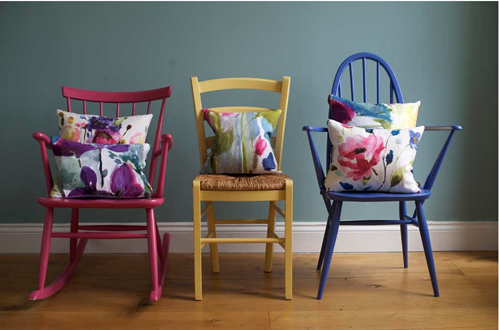
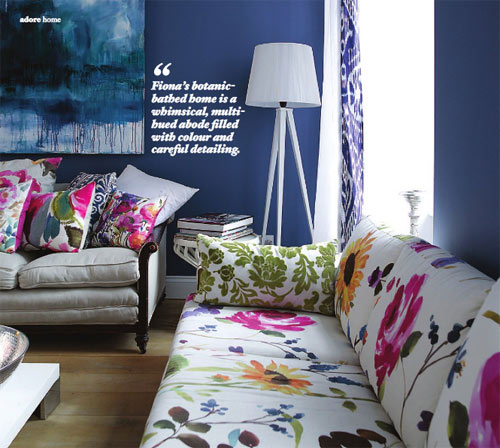
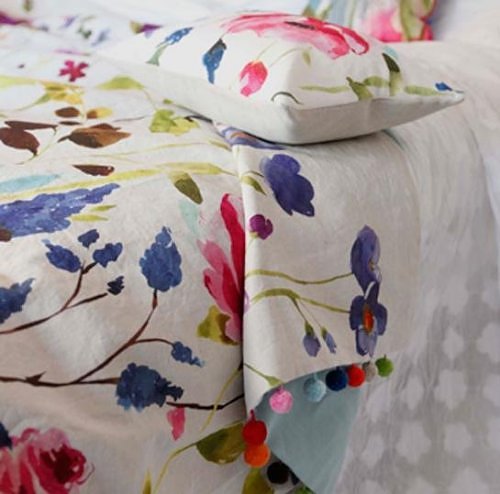
Bluebellgray handpainted throw pillowsBluebellgray bedding

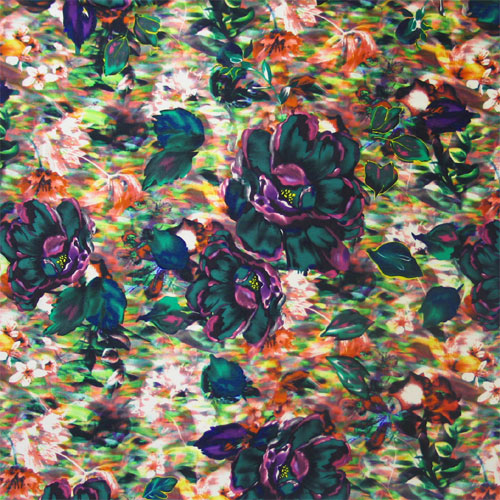
I forgot how pretty and fresh watercolor, especially floral and abstract, fabrics are. We were deluged with them in the late 1980’s and early 1990’s and they had to go into hibernation for 20 years for us to appreciate them again.

I have had my eyes on some watercolor silk charmeuse fabrics for a couple years and decided to take the plunge and use them to create decorative pillow covers and throws. They arrived this week and I am mesmerized by them.

Also, take  a look at the work of Vivian Ducas of C*Est La Viv. She draws beautful floral watercolors that are available on Spoonflower as fabric, she has an Etsy store and her artwork is available as greeting cards and canvas art through Fine Art America. Her Pink poppies is one of my favorites. http://fineartamerica.com/featured/pink-poppy-graphic-cest-la-viv.html

Pretty, pretty, pretty!

May 16, 2011

2 Comments

Vintage and retro tourist map linens are back in vogue.

tea towel vintage Etsy

tea towel stool Linden Centre for Contemporary Arts

tea towel Suzie Stanford katani-couch

tea towel chairs Suzie Stanford

tea towel vintage apron from Curly Pops

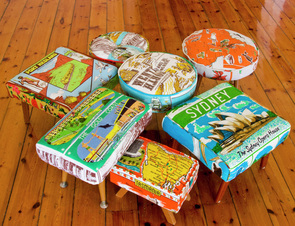
I have been seeing increased interest in vintage tea towels,  tablecloths and linen calendars.  Many kitchen textile  manufacturers have come out with nostalgic retro collections of  tea towels, potholders and tablecloths. But the best yet,  has been the use of vintage tea towels to upholster furniture. Suzie Stanford of Melbourne Australia has designed a number of these for her clients and they are fun and timeless! Check out her  pieces at her modest website. They are fabulous!  http://www.suziestanford.com.au/index.htm  This trend seems to have spread across the continent.

One man’s ticky tacky is another’s happy crappy.

I sometimes find myself wanting to challenge the shelter mags, HGTV and the numerous interior decorating blogs to show me something that is interesting or inspirational, albeit completely irreverent. I have never been interior decorating obsessed but I have always had great respect for people who are able to use their noodle to find design , decotating and storage solutions that are truly within their budget,  out of the ordinary or creative.

When I think about the early days after getting out of school and dumpster diving for furnishings because my salary was such that the only discretionary income that I had was spent on vodka and cigarettes, I smile and remember  how I and many of my peers pimped our pads. We did aspire to the Pottery Barn look back then. However, ready-to-assemble and hand-me-downs were the only furnishings that fit into our budgets.

By the time I turned 30, my sister and her husband had taken me to furniture and antique auctions a few times.  I began to realize that I could truly get higher quality and more interesting home furnishings at these auctions than the ready-to-assemble particleboard that I had been buying. Oh, and  at these auctions I  also  could buy lung-collapsing coffee,  stale donuts  while receiving looks of utter disgust from real antique dealers who saw me as an interloper.  I felt a bit self-concious and out of place, but I knew I was never going back to particle board and faux oak finishes after seeing solid mahogony dressers for $50. (This was long before the days of HGTV and other do-it-yourself decorating tutors.)

Last year, after reading recommendations in the shelter magazines, I purchased the book ‘The Selby Is In Your Place’.   It is a compilation of photographs taken by the author in the dwellings of many of his acquantences and clients, mostly people who work in creative arenas.  The common thread was that none of the dwellings and dwellers were mainstream in their approach to home design and decorating.  The book was fun in the beginning, but it rather bored me to see dwelling after dwelling filled with tourist quality religious artifacts, dark accents and accessories that seem intentionally weird or shocking. It just became another decorating style to me. I’ll call it The Refugee motif due to my lack of formal training.

The bottom line is that one man’s ticky tacky is another man’s happy crappy. There is no right or wrong. It is subjective and what resonates with one person can cause another person to whince. Let me just share a few home pics that share a decorating style that is warm, happy and very pretty to many people. However, I seldom see these types of room schemes in the mags and the blogs. The important fact is that some awesome people live in these homes and rooms. One room could be Great Aunt Mimi’s livingroom, another can be the kitchen of the neighborhood woman who always bought your Girl Scount cookies and another might be the yard of the couple who always waved and wished you a great day when you passed them and their abode.

Stay tuned for the next nostalgic blog that includes afgans and plastic-covered sofas. At least people actually bought heirloom quality furniture worth preserving. Lucky us! We all want their furniture now.
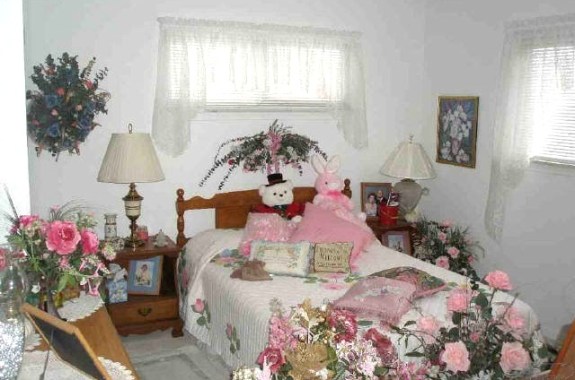
Pink in big in 2011! Faux flora never goes out of style.
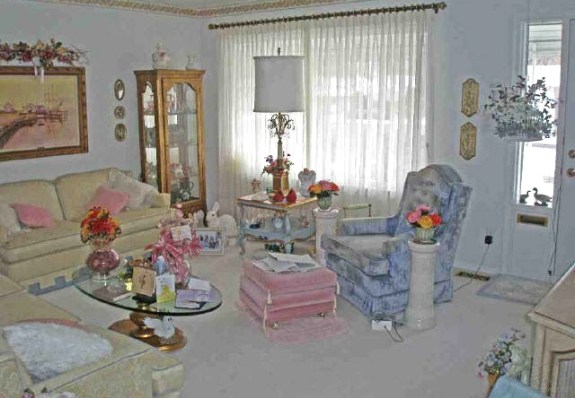
Hawleywood glam

“Get out of the diningroom, Donna.”
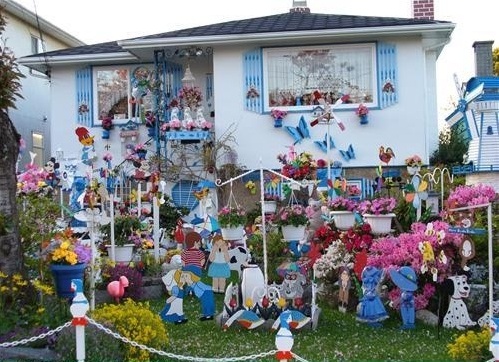
The most spirited family in the neighborhood.

Why stop with the interior when you can express yourself right to the sidewalk?
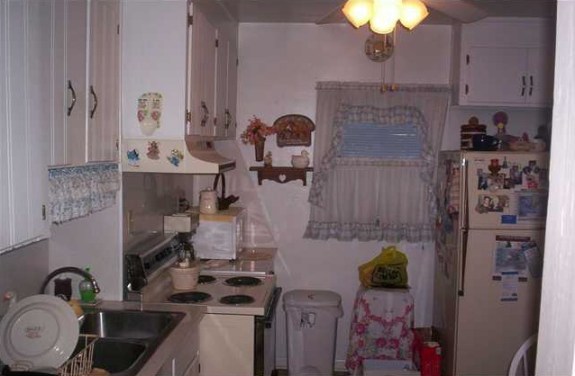
A real working kitchen is the heart of the home.

  Pretty, pretty potty.

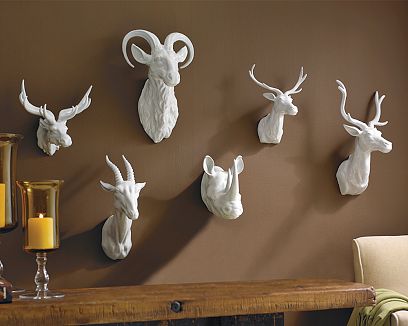
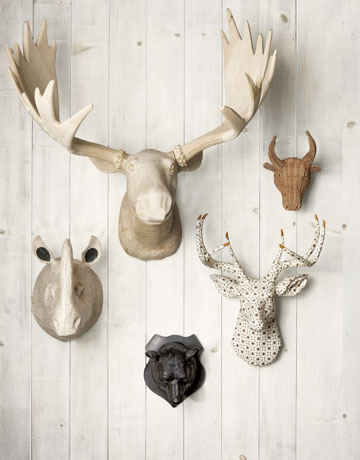
Taxidermy: real or fake- one decorating trend in 2010 that I hope gets away.

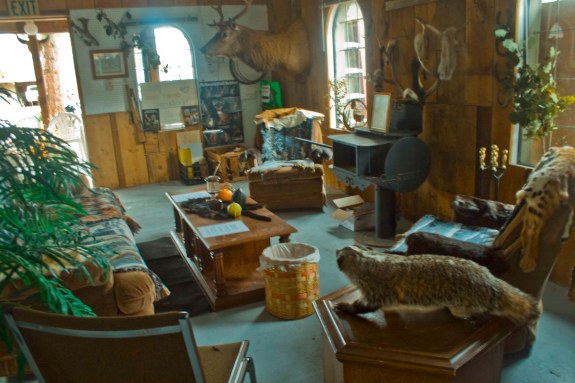
Taxidermy, wall to wall and paneling. Heaven on earth.

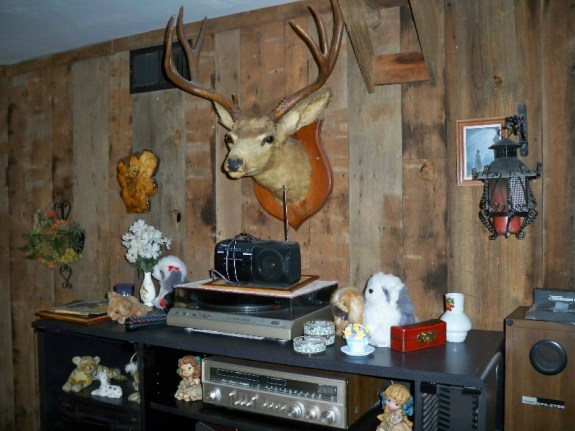
Taxidermy, fake flora and fuzzy stuffed animals. BYOB.

Taxidermy, fake flora and fuzzy stuffed animals. BYOB.

How the heck did faux, fake or real taxidermy come back into fashion? I am scratching my head. I thought it was in vogue with the shelter magazines only until I started seeing it in chain lifestyle stores and catalogs. Why, oh why, am I unable to warm up to this trend?  Even the stylized pieces in white ceramic, acrylic and cable knit leave me baffled.  I’d rather display my 11 year old neice’s nose-shaped pencil sharpener. (You insert the pencil into the nostril to sharpen it.)

Six heads are better than one.

Six heads are better than one. Courtesy of Williams-SonomaYou’d lose your head if weren’t attached. More true here than anywhere.

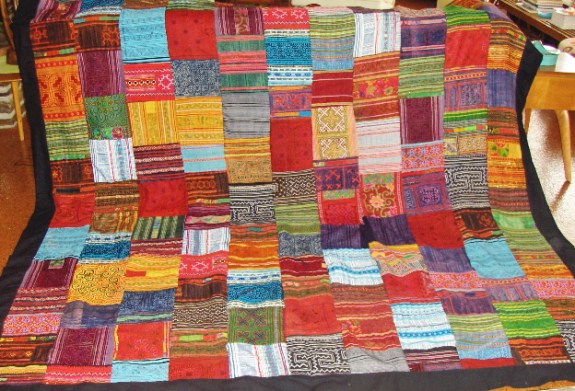
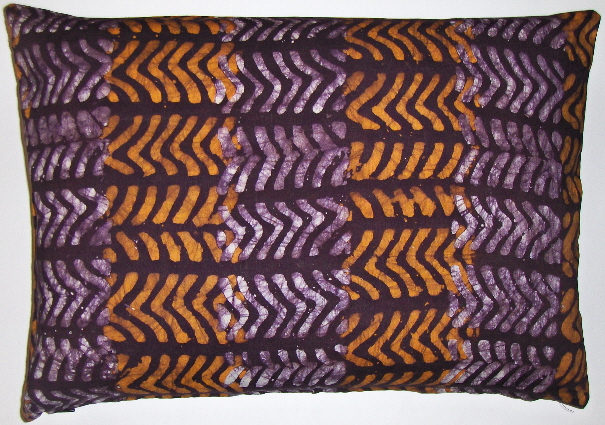
Hmong tribe handwoven embroidered hemp and cotton batik is the cultural bees knees.


Fabricadabra throw pillow made from Hmong tribe hemp batik and patchwork embroidered cotton

When I first saw those long  narrow strips of indigo tie-dyed hemp with embroidery and vintage cotton patchwork I stopped dead in my tracks.  They were just photographs and I was still mesmerized by their intricacy, mixture of textiles and techniques, bright colors and raw beauty. Who made these? How can I get some of this amazing fabric?


So, the research began. Without elaborate detail or turning this into a history or anthropology lesson, here it is.

Numbering about 80,000, the Hmong hilltribe are Thailand’s second largest hill tribe in the Golden Triangle around Chiang Mai & Chiang Rai. They migrated from China to the mountainous areas of Vietnam, Laos and Thailand.  They also brought with them a very rich artisitic history that includes textile arts traditionally practiced by Hmong people.  The embroidery consists of bold geometric designs often realized in bright, contrasting colors. Different patterns and techniques of production are associated with geographical regions and cultural subdivisions within the global Hmong community.[1] For example, White Hmong are typically associated with  reverse applique while Green Mong are more associated with batik. .  Today, the practice of embroidery continues to be passed down through generations of Hmong people and their textile art  remains an important markers of Hmong ethnicity.

So beautiful!

Hmong tribe fabrics woven in VietnamHmong tribe hand embroidery example

Hmong hand embroidery exampleHmong blankets

Hmong blankets

Hmong blankets

Hmong fabrics Vietnam from Nancy Knitsuk blog

Hmong fabrics Vietnam from Nancy Knitsuk blog

Cheeky eco-friendly upholstered furniture is just good, clean fun!

Sustainable needn’t be stodgy.

Sustainable needn’t be stodgy.

EKLA HOME is pleased to share its newest collaboration with us. They have constructed our handcrafted upholstered furniture (still always using natural latex rubber, organic wool batting, FSC-certified hardwoods and non-toxic stains) using  O ECOTEXTILE’s Northern Lights bamboo/organic cotton velveteen on our  Chester sofa and using Fabricadabra’s organic cotton Cheeky ikats and Dutch wax print on the ottomans and pillows.
 
The completely non-toxic Olivia ottoman is the newest addition to our collection . As seen above in Fabricadabra’s fabrics, it retails for $495.  The Olivia can also be covered in any of our other fabrics for a few dollars less, as well as in customer’s own fabrics.

Introducing Elime Home printed organic cotton upholstery fabric!!!!

Elime Home organic cotton ethnic fabric
Elime Home organic cotton large scale floral fabric
Printed on certified organic cotton sailcloth that was woven in the States and uses low impact fiber reactives dyes. Printed in the States, too. The print width is 59″ wide and the fabrics are all suitable for home furnishings, including uphholstery.
Elime Home organic cotton silhouette floral fabric
Elime Home large scale flamestitch organic cotton fabric

Elime Home organic cotton geometric fabric

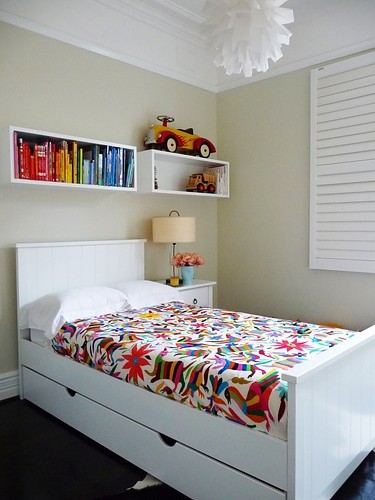
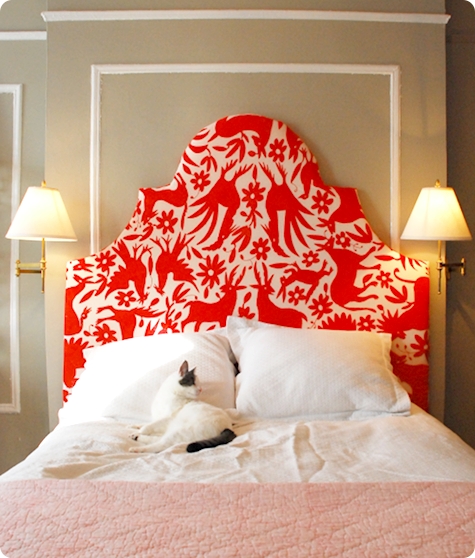
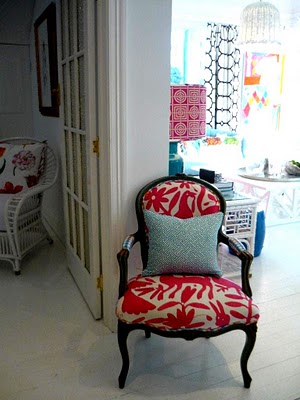
Hand embroidered Tenangos make me want to do the fandango !

I’ve been seeing them here and there for a few years and they always stop me dead in my tracks.  I see them used as tablecloths, table runners, wall hangings, bedspreads and just beautifully draped  over  pieces of furniture as throws.They are incredibly happy and impactful as monochromatic embroidered symbols in  fiesta colors.

The Otomi Indians who reside in the state of Hidalgo Mexico have been weaving these beautiful and intricate patterns for ages. According to Laura Aviva, who wrote an article about them for Hand/Eye Magazine, the designs were once much more intricate and elaborate. However, in the 1960’s, after a long drought that negatively impacted their livelihood from agriculture, the Otomi began to produce more elemental weavings that could be sold to earn money.  The images are symbolic and represent scenes from everyday life. Common images are armadillos, roosters, flowers and animals.  Check these out!

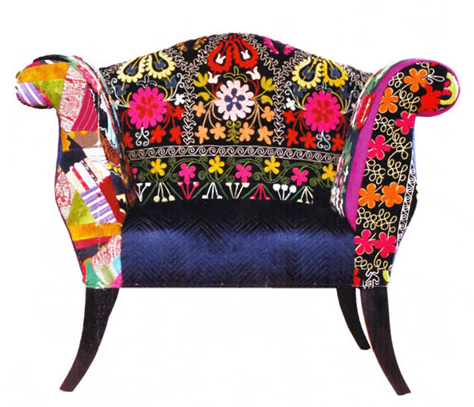
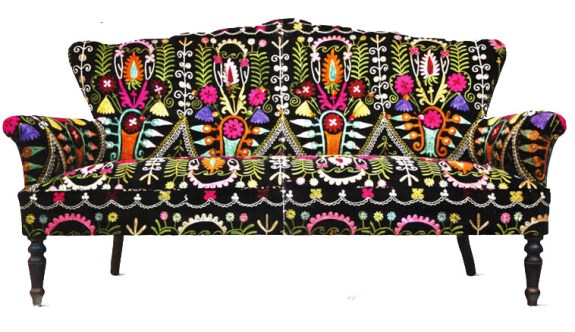
Bright ethnic textiles pieced together on mid-century modern frames : BREATHTAKING

BOKJA DESIGN: You leave me breatheless.  I first saw your gorgeous upholstered furniture while doing a Google image search about six months ago. I saved many of the images and decided I had to come out of hiding and blog about the pieces. Then, well, you know what happens. You get swept off in another direction and altogether forget what it is that swept you off your feet.  I do keep inspiration boards and have Bokja’s images ready for the next board, but the next board is empty next to a pile of pictures that want to call the oard “home”.

Today, while searching for an image for my website, I caught a glimpse of the images I had saved and decided that I had to share your existence with all of the my followers (0) and everyone else who stumbles upon my infrequent postings.  I’m not so sure I need to share your entire story and evolution because you have a  great website and it tells us all. It is www.bokjadesign.com . The two Beirut-based founders chose the name Bokja, as they explain on their website, because bokja is an expression of respect and love for an age-old culture and aesthetic with a human approach. Emphasis is on color, craftmanship and sustainable use of the materials that are available to them to express an artistic idea with spirituality. (That is beautiful.)

So, let their pieces speak for themselves.

Eco home furnishing fabrics revisited

I have compiled a list of interior decorating fabric companies that have put out lines of fabrics for interiors that are eco or more environmentally responsible of sorts. Some of the companies focus on recycled polyester and tend to be more suitable and practical for contract applications. In term of actual health benefits, I’m hardpressed to classify these as having those attributes. However, they reuse or recycle existing manmade fibers and keep them from the landfill, so I’ve included them. The ones that use natural fibers such as cotton or wool tha are not sprayed with pesticides and are processed so has to be less toxic to people and, naturally, the environment are also included and I have tended to put these int0 the category of residential applications because they do not all meet the FR and durability requirements for contract use.  For the most part, I put pigment printed fabrics into residential non-upholstery purpose since pigments just do not hold up as well as other dyestuffs and can fade and crock more easily than others. I am not saying that one cannot use them on upholstery, but great care must be taken to keep the pieces away from regular use and away from light and fading sources such as gas.

I am sure there are so many companies that are bringing out healthier and more environmentally responsible fabric lines about which I do not know. I would love for anyone to share with me any companies that are doing so, so that I can research them and add to the growing list!

Company and website section directed toward sustainable home furnishing fabrics FR & durablity rating end use
http://www.diceymill.com/Organiccottonfabrics.html residential upholstery
http://www.rubiegreen.com/ residential bedding,table top, window, craft
http://www.pindler.com/green/orgfab/1661.html residential upholstery , multi-purpose
http://www.elimehome.com residential upholstery, multi-purpose
http://www.livetextiles.com/ residential mutli-purpose
http://www.lesindiennes.com/ residential bedding,table top, window
http://www.jennyleekatz.com/index.php?cPath=11&CDpath=0 residential craft, accessories
http://www.organicfabric.com/index.html residential mutli-purpose
http://www.daisyjanie.com/ residential craft, accessories
http://www.oecotextiles.com/ residential upholstery , multi-purpose
http://www.rakshabellaorganic.com/ residential bedding,table top, window
http://www.carrtextile.com/organiccottonduck.html residential upholstery, multi-purpose
http://modgreenpod.com/ residential bedding,table top, window
http://www.indikaorganics.com/ residential upholstery , multi-purpose
http://www.oliveiratextiles.com/ residential upholstery , multi-purpose
http://www.amenityhome.com/e-store/home.asp residential bedding,table top, window
http://www.harmonyart.com/ residential bedding,table top, window, craft
http://cloud9fabrics.com/index.htm residential craft, accessories
http://www.nearseanaturals.com/ residential mutli-purpose
http://blog.betzwhite.com/2009/07/coming-together-at-seams.html residential craft, accessories
http://www.moralfibre-fabrics.com/home_products.html residential mutli-purpose
http://www.madelineweinrib.com/mw/fabric-organicblockprint/index.html residential mutli-purpose
http://www.picknatural.com/index.html residential mutli-purpose
http://www.envirotextile.com/ residential upholstery , multi-purpose
http://www.valleyforge.com/ contract-no cut yardage upholstery
http://www.qcollection.com/index.php?mode=fabrics&type=residential contract & residential upholstery, window
 http://www.fschumacher.com/collections/terra.aspx contract & residential upholstery, bedding
http://www.robertallendesign.com/fabrics/featured_4.aspx contract & residential upholstery
http://www.green-weave.com/Photos.html contract & residential mutli-purpose
http://www.brentanofabrics.com/green/Default.aspx contract & residential upholstery
http://www.kravetgreen.com/fabric.htm contract upholstery
http://www.maharam.com/vl.html contract upholstery
http://www.knoll.com/products/textileCatProducts.jsp?cat_id=161 contract upholstery
http://www.designtex.com/upholstery_Product.aspx?f=35538 contract upholstery
http://www.architex-ljh.com/ contract upholstery
http://www.carnegiefabrics.com/the_environment/our_products.htm contract upholstery
https://www.themomgroup.com/sustainable_contract_textiles.shtml contract mutli-purpose
     

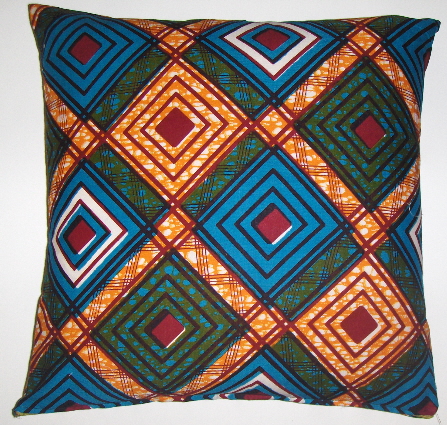
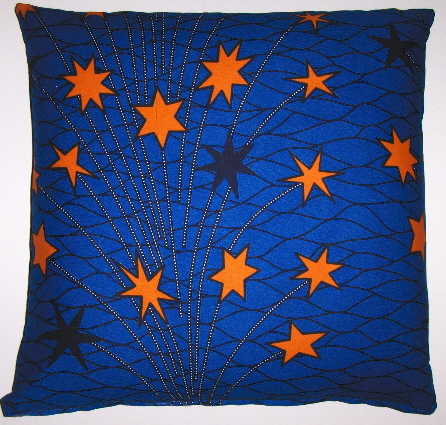
Dutch wax printed fabrics leave me breathless

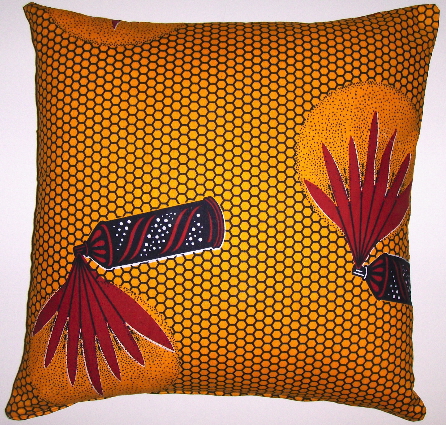
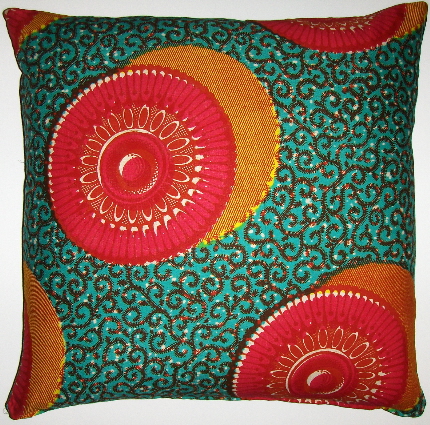
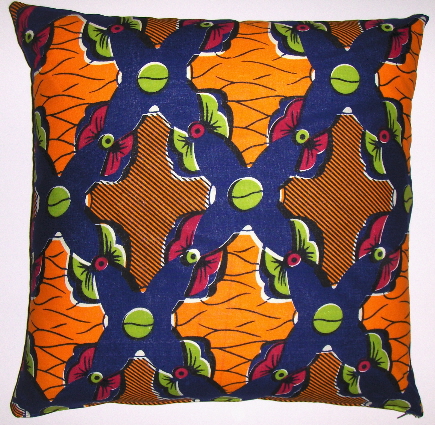
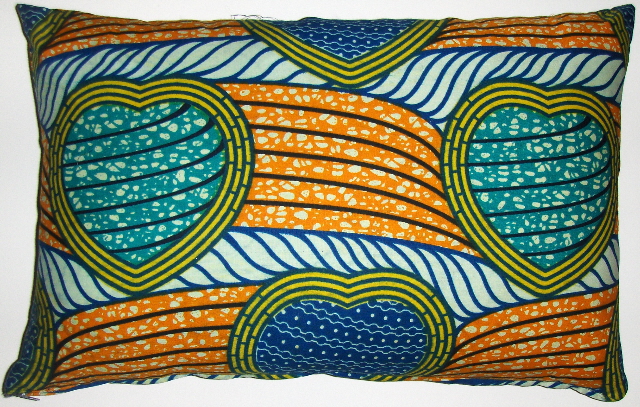
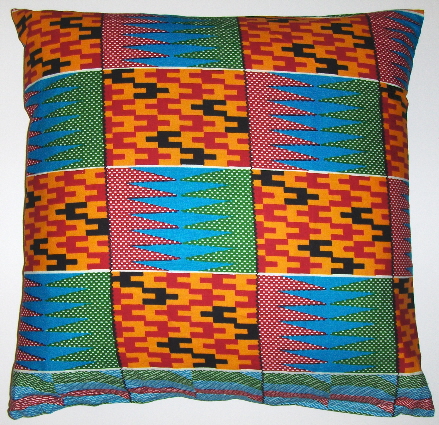
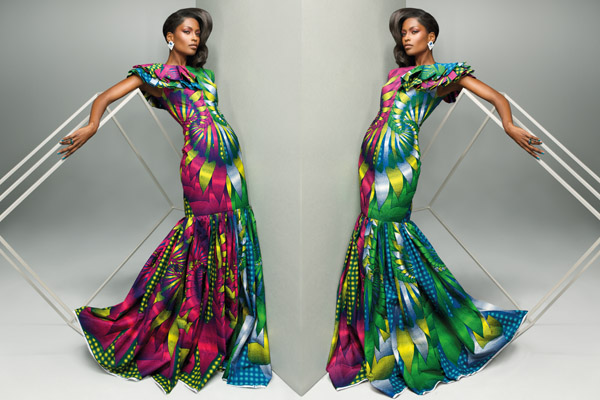
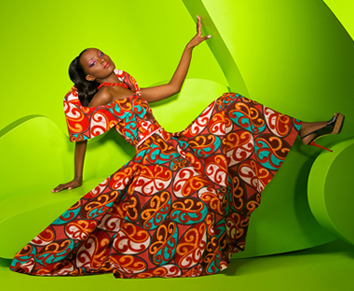
Dutch wax printed fabrics are primarily exported to Africa and used for apparel fabric by those who want the best wax prints or batiks in the market.  Oddly enough, many Amercians believe that these come from Africa and will refer to them as African wax print fabrics. A couple Dutch companies have been exporting their very contemporary and colorful fabrics into Africa since the 1950’s and these fabrics are highly valued, a sign of status and prosperity. There are many companies that now knock-off the Dutch companies and are able to sell them at much lower prices. Many of the knock-off are being produced in Africa and China. Interestingly enough, I found two companies in the New York city area that are peddling fakes of the Dutch of the wax prints. The print quility and basecloth quality are not as high, but the prices are a fraction of what the real Dutch wax prints are. So, there is a growing demand for the fakes.

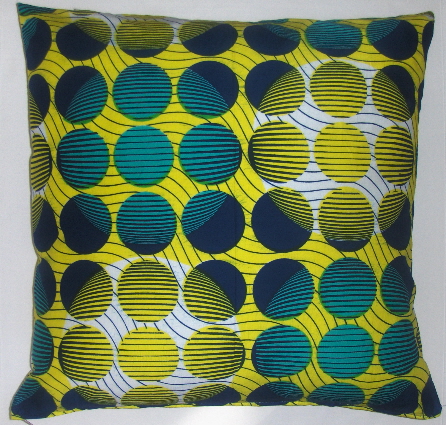
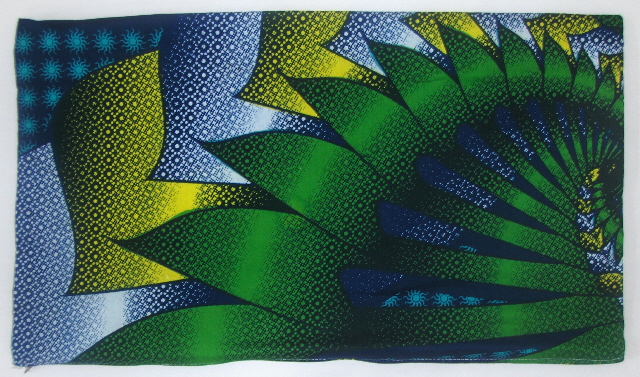
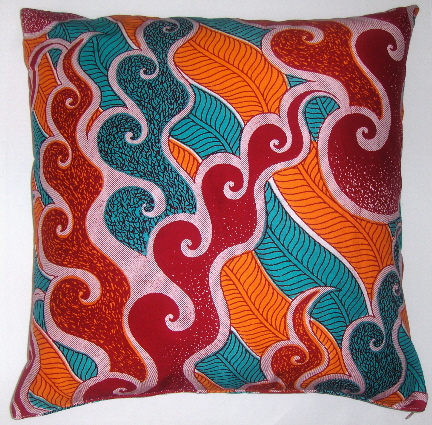
I am having a love affair right now with the Dutchwax prints and have begun to incorpate pillows made from them into my line for Spring 2010. Some are on the site now and the best ones should be available in about two weeks.  I have seen these fabrics being used in haute couture recently and am confident that they will become a trend that trickles down to the masses and crosses from apparel to home furnishings. Feast your eyes on some of these!
Dutch wax printed fabrics come home.

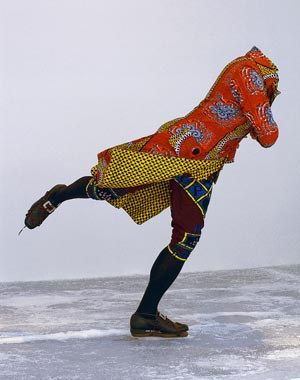
I have been experiencing a  love lately for Dutch wax printed fabrics.  I saw a review of a multi-media exhibition at the Brooklyn  Museum in 2009 by Yinka Shonibare, a contemporary British-Nigerian artist.  He uses what we in the States refer to as African wax print fabrics throughout his exhibitions. The amazing fabrics in the pitures just blew me away. They were large spirited printed abstract patterns in riots of color that were mesmerizing.

 What I learned is that these “African textiles” are actually of Dutch origin and were inspired by the beauty of Javanese batiks that are laboriously handpainted and use the wax resist method of dying. The batik and wax printed apparel fabric that is an integral part of West Africa’s culture is actually from the Netherlands. There are knock-offs coming out of China and West Africa that cost less money, but the coveted ones are the ones produced by the Dutch that have been exported to West African since the early 1900’s.  I find this completely fascination because, as a textile maven, I never knew this until I did some research after the article on the exhibition.

Anyway, I have seen  these fabrics used in haute couture and they are starting to grace catwalks.  I have enclosed some amazing photos of  gorgeous apparel using these Dutch wax prints.

I have not been able to contain myself since I decided to bring out a decorative pillow collection that use these expressive prints. They are all meant to be thrown together without obvious coordination of pattern and color.  I have finally added some to my collection on www.fabricadabra.us and so hope that the home furnishings industry begins to embrace Dutch wax prints as much as apparel has.   I predict that they will become a high end design trend in home furnishings.  What are your thoughts?

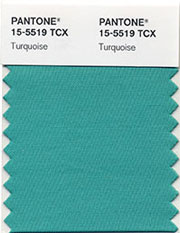
Turquoise 15-5519 : Pantone, are you serious?

Pantone's 2010 color of the year

It has been a few weeks since I read that Pantone chose Turquoise 15-5519 as the color of 2010. I quickly took out my Pantone textile fan, saw the color, and thought, “Ugh. What were they thinking?”  I don’t dislike the color. I love turquoise and have for as long as I can remember. I have it all over my house. But, it just doesn’t resonate as the right fashion forward choice for 2010 as Mimosa did for 2009. Even at that, I thought the color of Mimosa was a perfect fit and a vibrant color for 2009, given the economic uncertainty of the time.  However, the name didn’t match the actual color. My mimosas have always have a redder cast, making it more orange, you know, from the orange juice!?
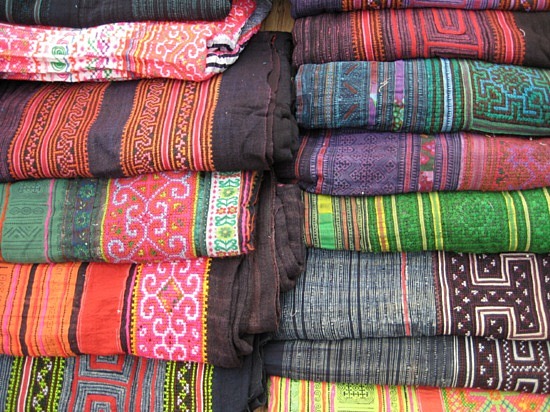

Turquoise isn’t just one color, it is a range of hues and depths. So, I’m not complaining about the name that is attached to the color.  I’m just struggling with the color or range choice.  There are all around us lately stunning purples, carnations, jewel tones, robin’s egg blues that are refreshing and welcoming.   I am struggling,….. 

There are so many beautiful shades of turquoise out here. I expected a cleaner, lighter, less yellow version of turquoise. The one they chose is quite heavy,  retro and has been out there for a few years now. As I said, it is all over my house. But, my house is a mid-century modern with a mid-century color palette.

I am appealing to anyone out there who reads this to share his or her opinion of the color choice wth me. Please also share your insight as to why this is the correct color choice for 2010. We know that since they chose it, people will buy it. I am resisting the need to immediately add some pillow fabrics from my line that use this color. Thankfully, some of my pillows already do.

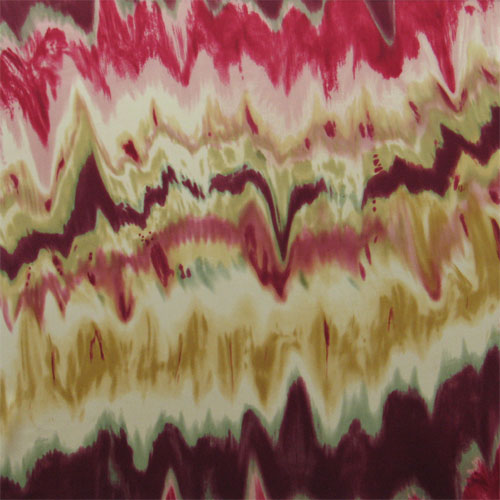
Ikats maintain status as a classic weaving technique

Fabricadabra's #1 best selling ikat pillow cover

Ikats have experienced a resurgence of popularity in apparel and home furnishings over the past few years.   So many people are asking when this trend will go away. In reality, I think ikats will be around for as long as they already have been.  (Ikats date back to as early as the 15 th century and have been a classic weaving technique along the Silk Road, in India and in Central and South America.)  Appreciation for them has always existed and will continue to.  Since they are ubiquitous right now, some people are just plain sick of them.


I have loved ikats for as long as I can remember and don’t think I’ll ever tire of them.  I have truly enjoyed seeing them as upholstery fabric on furniture, as artwork on walls and as great throw pillows. Madeline Weinrib deserves huge kudos for bringing them back into the world of home furnishings in a highly visible manner. Her pieces are impeccable and 100% silk,  but they are also too expensive for the average consumer.

At Fabricadabra, I have been selling lots of ikat pillows and sales are still trending upward on them. I do think that a big part of the success of them  on my site is that they retail at $30-$40 each. I sell them without the filling to make shipping inexpensive. But, I also use the ikat on the face and back, rather than using a less expensive solid on the back. Mine are a blend of 50%silk/50% cotton, which helps to keep the prices affordable.  I buy my fabrics directly from a weaver in Tashkent Uzbekistan and do not work through a broker. This helps to keep the cost down, too.

Currently, I sell only pillows but I am seriously considering seling the fabrics by the yard. One seeming limitation with this is that ikats are handwoven on small  looms typically produce fabric that is only 15″-20″ wide. So, if  one wanted to use the fabric for wondow treatments, a duvet or even to upholster a chair, there will be visible seams in the fabric. The seams can align with the pattern repeat to look less obvious or they cannot be pattern matched. This actually results in a very interesting look.

The surrounding have been my top five best selling ikats through  Summer  and into September(although I expect a shift to deeper colors through the Winter).  I have a number of new ikat designs and colors in work that I will introduce within two weeks.   I have added three amazing solid color ikats to collection for Fall that are already for sale on the website. These tie back colors in some of the multi-colored ikat pillow covers. I hope you enjoy them!

One of Fabricadabra's top 5 best selling ikat pillow cover

One of Fabricadabra's top 5 best selling ikat pillow cover

One of Fabricadabra's top 5 best selling ikat pillow covers

Eco Upholstered Furniture Options

Price range FSC certified wood

No VOC stains

Water-based glues

 Natural latex cushion

Uses wool for FR compliance

Organic or renewable natural fabrics

Sells only non-toxic furniture

Owns its factory

Has product or factory eco certs

Member of  Sustainable Furniture Council

Contributes %-age of profits

Making non-toxic furniture for more than three years

SCORE

Comments

Pottery Barn $

1

1

soy-based foam cushion, recycled poly foam arms, recycled steel springs
Crate & Barrel $

1

1

2

corn and soy based cushions/ wood from responsibly mananged forests. Made by Lee.
Norwalk Furniture $

1

1

2

Preserve soy-based foam.)Only 10% soy. Recycled wire
Mitchell Gold & Bob Williams $$$

1

1

2

domesticaly sourced wood, soy based foam, regenerated fibers
Room & Board $

1

1

1

3

Can’t figue out what is eco about their pieces other than FSC-certified wood.
Palacek $$

1

1

1

1

4

imports all. Thru trade
CR Laine $

1

1

1

1

4

down2earth collection only. Soy-based foam. Sold only at Circle Furniture.
Harden Furniture $$

1

1

1

1

1

5

Preserve soy-based foam.)Only 10% soy.
Ikea $

1

1

1

1

1

5

poor carbon footprint, uses wood from responsibly managed forests. Eliminates many toxins.
Rowe Furniture $

1

1

1

1

1

5

 Eco-Rowe Collection only. Soy-based foam.Recycled polys. PBDE-free.
Lee Industries $$

1

1

1

1

1

1

6

20% soy-based Preserve foam. Recycled poly. Sofas start at $1800+
Bean Products $$$$

1

1

1

1

1

1

6

Chicago. Small collection.Sofa $5200. Doesn’t use wool for FR??
Viesso $$

1

1

1

1

1

1

6

LA. No organic cotton and no wool. Sofa=$2900
Maria Yee $$

1

1

1

1

1

1

1

7

imported from China.Bamboo frames
RC Green/Vivavi $$$$

1

1

1

1

1

1

1

7

LA. Sofa $5600. Sold only in Vivavi
Q Collection $$$$$

1

1

1

1

1

1

1

7

NYC. Sells through showrooms. Won best of Green for juvenile collection.
Pure by Ami McKay $$$$

1

1

1

1

1

1

1

7

no wool. Flame retardants? Sofa=$5200
Greener Lifestyles $$$$

1

1

1

1

1

1

1

1

8

$5800+ for sofa
Furnature $$$$

1

1

1

1

1

1

1

1

8

Pioneer. Sofa $5200
Zola $$$

1

1

1

1

1

1

1

1

1

9

Oregon. Sofa $4800
Environmental Language $$$$$

1

1

1

1

1

1

1

1

1

9

Chicago  Eco upholstered furniture options
Cisco Bros. $$$$

1

1

1

1

1

1

1

1

1

9

LA. Sells through showrooms. 82″ sofa $5000
EKLA Home $$$

1

1

1

1

1

1

1

1

1

9

Sofa $3800
Greener Lifestyles $$$

1

1

1

1

1

1

1

1

1

9

Seattle based. 75″ sofa $4500
A Natural Home


Further comments: Many of these companies are using soy-based foams, ranging from 5%-20%, but the balance is still petroleum and have chemical flame retardants. They did not earn                          points under “Non-toxic foam cushions”.
I did not give points to companies using natural fiber fabrics unless the fabrics contained no pesticides and low impact dyes.
Although some companies use certified eco ingredients, none posted certs on website and I gave no credit for component certification, only for certification of final product or factory.
Carbon footprint is important, but not included because origin of components and finished products are not divulged on  most websites.

PRICE: $=<$2000, $$=$2000-$3499, $$$=3500-$4999, $$$$=$5000-$6999, $$$$$=$7000+  for 84″ sofa